Nissan Leaf: Updated EV Competitor Faces Tough Competition
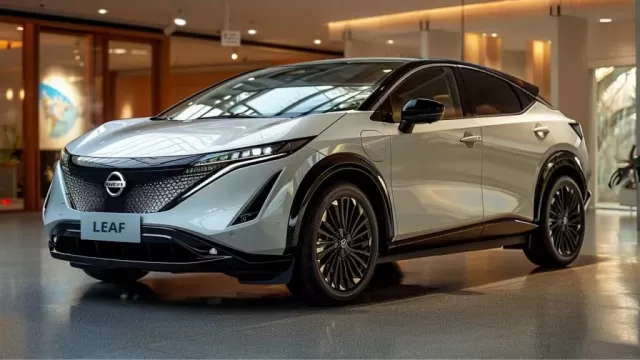
Nissan's latest Leaf represents a significant leap forward, aiming to reclaim its position in the compact EV market. The previous generation was hampered by outdated styling, an aging charging standard, and a less-than-impressive range. This new iteration clearly addresses the aesthetic concerns, adopting a fastback SUV silhouette reminiscent of the larger Ariya. Design cues, like the recurring two- and three-line motif, subtly nod to Nissan's Japanese heritage, symbolizing the numbers two and three.
Performance and Refinement
The top-tier Platinum+ trim boasts a 75 kWh battery, powering a single electric motor that delivers 214 horsepower and 261 lb-ft of torque. This motor, inverter, and reducer are ingeniously integrated into a single compact unit, contributing to both enhanced power delivery and a more refined driving experience. Acceleration feels brisk and responsive. While the suspension handles minor road imperfections with ease, larger bumps can cause a noticeable bounce, though it quickly stabilizes. The brake pedal offers improved feel over its predecessor, but a lingering sense of softness might still impact driver confidence. Overall, the engineering shows a marked improvement, though further refinement in the driving dynamics would be welcome.
Charging and Convenience
Nissan's decision to adopt the North American Charging Standard (NACS) for its fast-charging capabilities is a commendable move, aligning with the Tesla Supercharger network. However, retaining a separate J1772 port for Level 2 charging is a point of contention. This dual-port system could be confusing for new EV owners, potentially necessitating the use of multiple adapters for different charging scenarios.
Safety Features
Safety remains a strong suit for the new Leaf. The Pro Pilot Assist system is particularly impressive, maintaining a centered position within the lane with precise, gentle steering inputs, even through curves. The steering wheel's capacitive touch sensors are a positive inclusion, ensuring driver engagement.
Interior and Practicality
The interior design and material quality represent a substantial upgrade from the previous model. However, the touchscreen's angled orientation away from the driver has been a common observation among evaluators. Practicality for rear passengers is a concern, with limited legroom and headroom that might make accommodating adult passengers a challenge.
Range and Value Proposition
As EV technology rapidly advances, the Leaf's credentials are beginning to show their age. With a maximum charging speed of 150 kW and a 259-mile EPA range for the Platinum+ trim, it struggles to compete in the efficiency category against newer rivals. Many reviewers believe the Leaf's strongest value lies in its lower trim levels. The S+ model, starting at a significantly lower price point, offers a more compelling package. Furthermore, this base model boasts an impressive 303-mile range per charge.
The exclusion of key features like Google Maps with a route planner and a battery heater from lower trims is a notable drawback. When considering the overall value, alternatives like the Equinox EV offer a more comprehensive package and greater capability for a comparable investment. The absence of an all-wheel-drive option and its ground clearance, more akin to a hatchback than an SUV, further limit its appeal for off-road or low-friction conditions.
While Nissan deserves credit for modernizing the Leaf, the updates largely bring it in line with current EV offerings rather than introducing groundbreaking innovations. This review was part of the 2026 SUV of the Year testing, which assesses vehicles based on efficiency, design, safety, engineering excellence, value, and performance of intended function, with eligibility requiring a new or significantly revised model.