Nissan's Sunderland Electric Future: New Leaf Production Begins
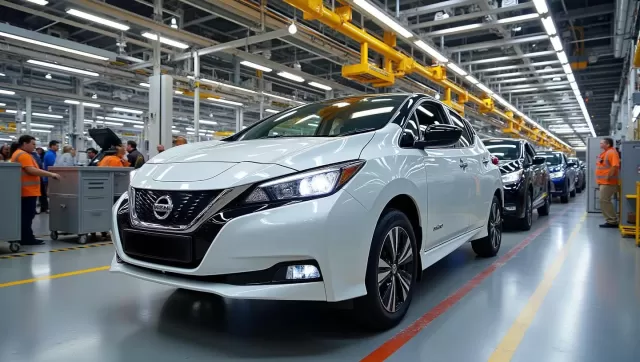
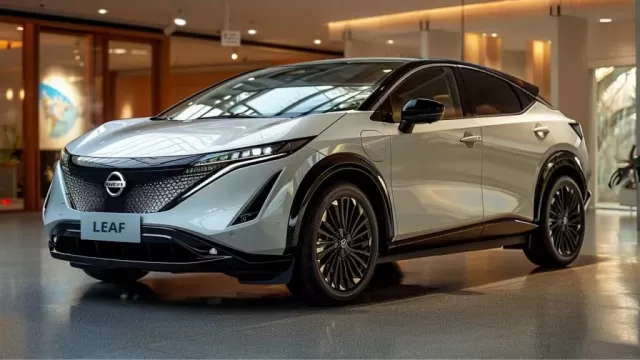
Production of Nissan's next-generation Leaf has officially commenced at its Sunderland facility, marking a significant milestone in the United Kingdom's transition towards sustainable transportation. This launch represents the third iteration of the pioneering electric vehicle, which was the first mass-produced battery-powered car to be manufactured in the UK. To date, the north-east England plant has assembled more than 282,704 Leaf models.
A Major Investment in UK Manufacturing
Nissan has committed a substantial sum of over £450 million to bring the new Leaf to market, with more than £300 million of that capital being channeled directly into its UK operations. The Sunderland site, which employs 6,000 people, stands as Britain's largest car factory. While it possesses the theoretical capacity to produce 600,000 vehicles annually, recent output stood at 284,000 vehicles for the year, according to data from MarkLines, reflecting a challenging climate for European automakers.
The updated Leaf is set to be a compelling option for consumers, featuring notable upgrades and government support. Key highlights include:
- An extended travel range of up to 386 miles from a single charge.
- An upgraded, larger 75 kilowatt-hour battery pack.
- Eligibility for the full £3,750 government grant for electric vehicles.
Securing the Future of Electric Vehicle Production
The commercial success of this new model is critical for the long-term viability of the entire Sunderland plant. In 2023, Nissan revealed it was exploring the possibility of manufacturing two additional electric models at the facility. These vehicles are anticipated to succeed the current petrol-powered Qashqai SUV and Juke crossover, although a final investment decision is still pending.
A positive outcome on these future models is also essential for the adjacent battery factory operated by AESC, a company with majority ownership based in China. This illustrates the interconnected nature of the regional EV supply chain.
This significant UK investment is taking place as Nissan undergoes a global restructuring initiative, which includes the closure of seven factories and a reduction of 20,000 jobs worldwide. This strategic shift follows a period of aggressive expansion and subsequent market challenges. The Sunderland facility, however, has been shielded from these cuts. Further demonstrating its strategic importance, Nissan's chief executive, Ivan Espinosa, suggested in May that the plant could potentially be used to manufacture vehicles for Dongfeng, Nissan's joint venture partner in China.
Support for the project has been strong, with Business Secretary Peter Kyle highlighting Sunderland's role as the vibrant heart of the UK's automotive industry. He described Nissan's investment as a powerful vote of confidence in both the north-east and the broader national economy. Echoing this sentiment, Adam Pennick, the plant's vice-president for manufacturing, spoke of the immense pride and enthusiasm among the workforce in building the new car. Industry Minister Chris McDonald is also scheduled to visit the factory to mark the occasion.