
Sonder Bankruptcy: Marriott Deal Collapse Leaves Guests Stranded
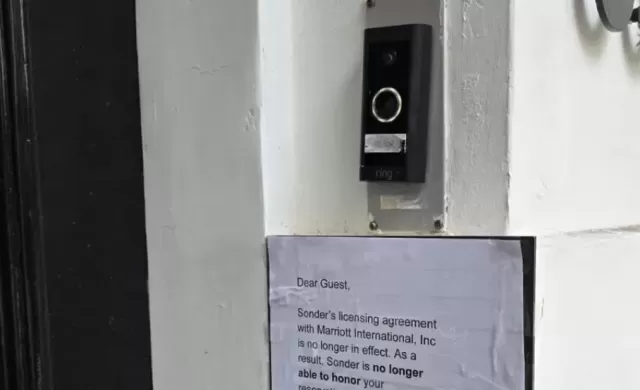
Sonder, a prominent player in the short-term rental market, announced its intention to file for bankruptcy on Monday, November 10th. This sudden development follows closely on the heels of Marriott International's decision to terminate a crucial licensing agreement with the company just one day prior. The abrupt ending of this partnership has left many Sonder guests in a state of uncertainty and scrambling for alternative accommodations.
Sonder's Financial Woes Trigger Bankruptcy Filing
In a stark public statement, Sonder revealed that despite significant efforts to stabilize its financial situation in the wake of Marriott's announcement, these attempts ultimately fell short. This led the company to initiate "Chapter 7 liquidation." The board of directors, facing an untenable financial reality, made the difficult decision to cease operations and proceed with a court-supervised dissolution of its U.S. business.
The ill-fated licensing deal between Sonder and Marriott was inked in August 2024. This agreement was designed to allow Sonder's properties to be seamlessly booked through Marriott's expansive Bonvoy loyalty program website. However, this collaboration proved to be short-lived. Marriott's swift decision to end the partnership, announced on Sunday, November 9th, marked the beginning of the end for Sonder.
Guests Left Reeling: Confusion and Disruption for Travelers
The fallout from Marriott's decision has been immediate and distressing for Sonder's guests. Reports indicate that many travelers found themselves unexpectedly needing to vacate their rooms within a 24-hour notice period. This sudden disruption left individuals scrambling to find alternative lodging, often with little to no prior warning.
One such guest, Connie Yang, recounted her experience to CNBC. Her prepaid stay in New York, scheduled from November 7th to November 17th, was abruptly canceled. "People were scrambling to leave before they locked down the building," she shared, illustrating the chaotic scenes that unfolded.
Another guest, Juan Ávalos Méndez, found himself in a similar predicament in Amsterdam. Three days into a planned 12-day trip, he woke on November 10th to discover a letter slipped under his door. The notice informed him of the hotel's impending closure and required him to check out by 11 a.m.
Joan Lee, a guest whose four-night stay in Rome was canceled, expressed her disappointment with Marriott's response. She noted that Marriott did not offer "any real solution" following the cancellation. Lee and her husband had specifically chosen Sonder for their upcoming Christmas stay due to its association with the Marriott brand, which provided a sense of security and familiarity, especially as her husband was already hesitant about alternative accommodation platforms like Airbnb. "It was disappointing," Lee stated, highlighting the lost trust and the absence of a viable alternative provided by Marriott.
Unpacking the Marriott-Sonder Deal Breakdown
Marriott's official statement on November 9th cited "Sonder's default" as the reason for terminating the licensing agreement. This implied that Sonder had failed to meet certain contractual obligations, leading to its immediate disaffiliation from Marriott Bonvoy. As a consequence, Sonder properties were no longer available for new bookings through Marriott's reservation channels.
Sonder's interim CEO, Janice Sears, offered a different perspective on the partnership's demise. In a released statement, Sears attributed the company's financial struggles, in part, to issues with the integration of Marriott Bonvoy's website. According to Sears, "unexpected challenges in aligning our technology frameworks" led to substantial delays. These delays, in turn, resulted in "significant, unanticipated integration costs" and a "sharp decline in revenue arising from Sonder's participation in Marriott's Bonvoy reservation system." This suggests a mutual blame game, with Sonder pointing to technical integration problems and Marriott citing Sonder's default.
A Look at Sonder's Business Model and Potential Pitfalls
Sonder operated as a short-term rental company that aimed to blend the convenience of hotels with the space and amenities of apartments. The company leased entire buildings or floors within buildings and then managed these properties as individual units, offering them for short-term stays. This model relied heavily on efficient operations, seamless technology integration, and a strong brand partnership to drive bookings and revenue.
| Key Aspects of Sonder's Operations | Description |
|---|---|
| Property Acquisition | Leased entire buildings or floors from landlords. |
| Unit Management | Managed individual units as short-term rentals, similar to hotel rooms but with apartment-like features. |
| Target Audience | Travelers seeking extended stays, business travelers, and those preferring a more residential feel over traditional hotels. |
| Technology Integration | Relied on proprietary technology for bookings, check-ins, and guest services. |
| Partnerships | Sought collaborations with major travel companies like Marriott to expand reach and credibility. |
The integration with Marriott's Bonvoy platform was a strategic move by Sonder to tap into a massive existing customer base and leverage the trust associated with a globally recognized hospitality brand. The ambition was to offer Sonder's unique accommodations to millions of Marriott loyalists, thereby significantly boosting bookings and revenue.
However, as Sears indicated, the technical integration proved to be a substantial hurdle. The complexity of merging two distinct technology infrastructures, especially when dealing with reservation systems, payment gateways, and loyalty program integration, can be immense. Delays in such integrations can have cascading effects, leading to increased operational costs and, critically, a loss of potential revenue if bookings are not flowing as anticipated.
The Fallout and Future Implications
The bankruptcy filing and the dissolution of operations will undoubtedly have far-reaching consequences. For guests who had prepaid for stays, the process of securing refunds will likely be complex and potentially lengthy, depending on the bankruptcy proceedings. Travel agents and corporate clients who had booked Sonder properties will also face disruption and the need to re-accommodate their travelers.
For the broader short-term rental and hospitality industry, Sonder's collapse serves as a cautionary tale. It highlights the critical importance of robust financial management, seamless technological integration, and carefully managed strategic partnerships. The reliance on a single major partnership, while offering significant potential upside, also exposes a company to considerable risk if that partnership falters.
The "default" cited by Marriott could stem from various factors, including failure to meet payment obligations, breaches of service standards, or non-compliance with brand standards. Without further details from either party, it's difficult to pinpoint the exact nature of Sonder's default. However, it's clear that the financial strain on Sonder was significant enough to make continuing operations untenable, especially after losing the Marriott affiliation.
As the legal process of Chapter 7 liquidation unfolds, creditors will come forward to assert their claims. The ultimate recovery for these creditors, including guests who may be owed refunds, will depend on the value of Sonder's remaining assets.
The swiftness with which this situation evolved – from a major partnership announcement to a bankruptcy filing in a matter of months – underscores the volatile nature of the travel and hospitality sector. Companies operating in this space must be agile, resilient, and possess a deep understanding of the technological and financial complexities involved. The disappointment expressed by guests like Joan Lee, who valued the Marriott brand association, also points to the significant reputational damage that can occur when such partnerships dissolve unexpectedly, leaving customers in the lurch. The future of the properties previously managed by Sonder remains uncertain, and the impact on the short-term rental market is yet to be fully realized.