AI Pioneer Miro Mitev: Decades of Vision in Finance
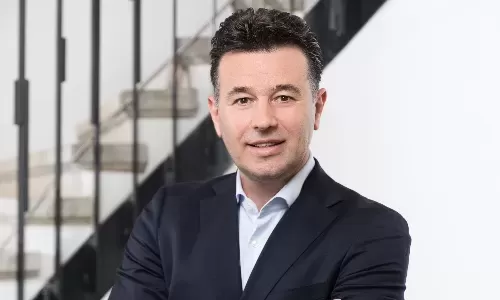
In the late 1990s, as the internet began its ascent into mainstream consciousness, Miro Mitev was already delving into a field that would take decades to gain widespread traction: artificial intelligence. A contemporary asset manager, Mitev was an early pioneer in applying AI to finance, discovering the potential of neural networks in 1997 while pursuing his studies at the Vienna University of Economics and Business. He expressed to CNBC his foresight regarding neural networks' capacity for financial forecasting, stating, "I fell in love with these kinds of possibilities."
Mitev has dedicated 25 years to financial forecasting, lending his expertise to institutions like Siemens and various banks. He subsequently established SmartWealth Asset Management, a firm where investment decisions are autonomously managed by a sophisticated network of AI systems. Their most recent fund, IVAC, is aiming for $2 billion in assets under management, with a projected annualized return target of 14-15%.
Despite the complete absence of human intervention in the AI's trading decisions, Mitev emphasizes that "humans are the most important part of the equation." This is because people are responsible for the crucial preparatory work: selecting training data, defining input variables, establishing model parameters, and continuously refining the algorithms. He cautioned that "once a model is created, it's very dangerous to start intervening." Trusting the established model, Mitev noted, is his paramount principle.
Instead of interfering with the model's operations, human oversight should focus on ensuring data integrity and calculation accuracy, as well as introducing new data to keep the AI current. Mitev lamented that "the worst is to overrule the results, and this is what happens very often," attributing this to a fundamental lack of initial trust in AI. He elaborated that even if immediate outcomes aren't apparent, a retrospective analysis after a couple of months often reveals, "Oh, actually, we were wrong."
The inherent human elements driving market fluctuations – optimism, pessimism, and speculation – are precisely what AI aims to mitigate. Even the European Central Bank has voiced concerns that the current AI-fueled market surge might be more a product of fear of missing out than rigorous technical analysis. Mitev asserts that removing human emotion from investment decisions leads to superior performance. SmartWealth Asset Management, for instance, has reported gains of 407.63% over a ten-year period ending November 1, 2025, a stark contrast to the industry benchmark of 145.34% over the same timeframe, according to data shared with CNBC by a firm representative.
While Mitev concedes that predicting market movements a year out is "not possible," his models allow for a foresight of up to one month. He concludes that "evaluating this information and making informed decisions based on this consistently proves to be providing better results than the human."
The continuous monitoring and integration of fresh data are critical, especially given the propensity of AI systems to "hallucinate," or generate incorrect information. Mitev attributes AI models' errors to issues like "overfitting," data discrepancies, or flawed model specifications. Overfitting, he explained, occurs when an algorithm excessively focuses on what he termed "noise" – data lacking meaningful predictive power because it doesn't reflect genuine cause-and-effect relationships with stock performance. Mitev asserted that rigorous design, validation, and live testing are the antidotes to these problems. Consequently, while his fund's strategy is entirely algorithm-driven, human involvement remains indispensable for ensuring its efficacy. He underscored that "It's actually a process that evolves over years...and this is the reason why in-house development of these kind of technologies is very important," particularly for entities seeking to establish a unique AI investment approach.