Luma AI's Ray3 Modify Revolutionizes Video Editing
Luma, the prominent AI video and 3D modeling company backed by venture capital firm Andreessen Horowitz (a16z), has officially unveiled its latest technological advancement: the Ray3 Modify model. This new release represents a significant step forward for the startup, specifically targeting the complex needs of creative studios and filmmakers who require high-fidelity control over generative video. Available now through Luma's Dream Machine platform, Ray3 Modify allows users to radically transform existing footage while strictly adhering to the nuances of the original performance.
The core innovation of Ray3 Modify addresses one of the most persistent challenges in the generative AI space: the preservation of human performance. Historically, applying AI modifications to video often resulted in the loss of an actor's specific intent, micro-expressions, or timing. Luma states that Ray3 Modify solves this by allowing users to input character reference images alongside their original footage. The model then "repaints" the scene, converting the human actor's appearance into the referenced character while retaining critical performance markers such as original motion, emotional delivery, timing, and eye line.
This capability offers profound implications for brand footage and creative storytelling. By utilizing a character reference, creators can ensure that costumes, likeness, and identity remain consistent across different shots—a notoriously difficult feat for earlier iterations of video generation models. Furthermore, Luma has introduced a feature that allows users to provide specific start and end reference frames. This addition gives directors and creators granular control over transitions, character movements, and behavioral continuity between scenes, effectively guiding the model to bridge the gap between two distinct visual states.
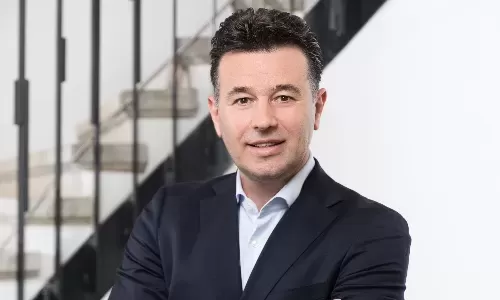
Amit Jain, co-founder and CEO of Luma AI, highlighted the balance between creativity and precision in a statement regarding the launch. "Generative video models are incredibly expressive but also hard to control," Jain noted. He expressed excitement for Ray3 Modify's ability to blend the "real-world with the expressivity of AI," granting full control to creative teams. According to Jain, this technology empowers teams to capture a performance on a physical camera and immediately modify it to appear in any location or costume imaginable. It effectively eliminates the need to recreate physical shoots, allowing for AI-driven "reshoots" that save time and resources.
The launch of Ray3 Modify places Luma in direct competition with other heavyweights in the AI video sector, such as Runway and Kling. Luma had previously released video modification capabilities in June 2025, continuing its aggressive product roadmap.
The technological expansion is supported by a massive influx of capital. The release follows a fresh $900 million funding round announced in November, led by Humain, an AI company owned by Saudi Arabia's Public Investment Fund (PIF). The round also saw participation from existing prominent investors, including a16z, Amplify Partners, and Matrix Partners. This substantial financial backing is not only funding software development but also massive infrastructure projects. As part of its partnership with Humain, Luma is planning the construction of a colossal 2GW AI cluster in Saudi Arabia, signaling the company's long-term commitment to scaling its compute capabilities to support future generations of AI models.