Trump's Nvidia Chip Decision Sparks Bipartisan AI Security Fears
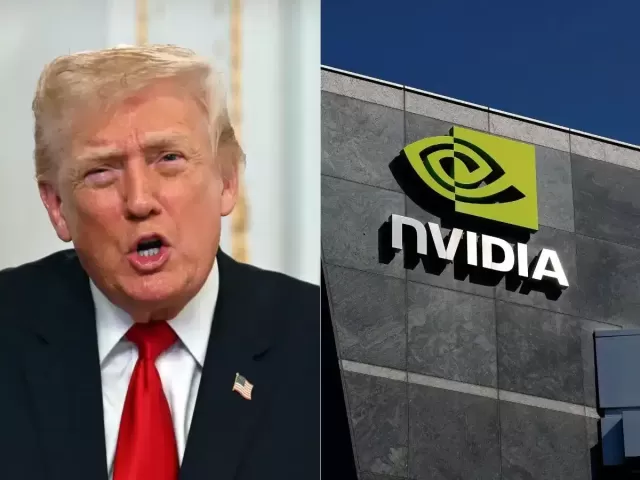
The recent announcement by US President Donald Trump to permit Nvidia's H200 chips for sale to China has ignited significant controversy. Critics across the political spectrum are voicing strong objections, fearing this move could erode America's crucial lead in artificial intelligence (AI) development.
Bipartisan Concerns Over AI Dominance
Both Democrats and Republicans in Washington have expressed alarm, suggesting that allowing these advanced semiconductors into China could cede a vital competitive edge in both the semiconductor industry and AI to a key global rival. The House of Representatives select committee on the Chinese Communist Party issued a stern public warning to Nvidia CEO Jensen Huang, who had recently engaged in lobbying efforts in Washington. Their statement on X declared that China would likely replicate Nvidia's technology, mass-produce it, and ultimately eliminate Nvidia as a competitor, a strategy they characterized as China's established playbook across critical industries.
This message followed directly on the heels of Trump's announcement that he had informed Chinese President Xi Jinping that Nvidia's H200 chips, essential for AI advancements, could be supplied to "approved customers in China and other countries under conditions that allow for continued strong national security."
National Security and Economic Ramifications
Senator Elizabeth Warren vehemently criticized Trump's decision, asserting it risked "turbocharging China's bid for technological and military dominance, and undermining US economic and national security." Senate minority leader Chuck Schumer echoed these sentiments, accusing Trump of betraying his campaign promise to adopt a firm stance on China. Schumer posited that Trump's actions were driven by a desire for personal gain and a desperate attempt to strike a deal with President Xi.
These developments occurred shortly after the US Justice Department revealed "Operation Gatekeeper," a significant operation that dismantled a sophisticated smuggling ring accused of diverting cutting-edge AI technology to entities posing a threat to American interests. The Justice Department highlighted that the chips in question, Nvidia's H100 and H200, are fundamental to achieving AI superiority and play a critical role in modern military applications.
Nvidia's Perspective and Lingering Questions
In response, Nvidia issued a statement on Monday commending Trump's decision, stating, "We applaud President Trump's decision to allow America's chip industry to compete to support high-paying jobs and manufacturing in America." Company representatives have indicated little further comment beyond this initial statement.
However, many details surrounding Trump's plan for H200 chip sales in China remain unclear. It is also uncertain whether China will readily adopt the H200. Previously, reports indicated that China had blocked imports of Nvidia's less powerful H20 chip due to concerns over potential "backdoor features" that could compromise its security. Nvidia has consistently refuted allegations of its products containing "kill switches and backdoors."
For over a year, Nvidia and its CEO have actively advocated for changes to US export regulations concerning advanced semiconductors. Proponents of stringent export controls argue they are essential to safeguard American technological advancements from falling into the wrong hands. Conversely, major technology firms like Nvidia and Microsoft contend that such protectionist policies hinder US influence in the escalating global race for AI supremacy.